The mid-sixties were a sweet spot for American pickups. Trucks still earned their keep on farms and job sites, but GM had started dressing them up for weekend duty. Coil springs smoothed the ride. Bigger glass opened up the cab. Chevrolet sold the Chevy C10, while GMC sold its near-identical twin with a bolder grille and its own big-bore V6 under the hood. Today, both trucks anchor the classic chevy truck scene, and most builders don’t care which badge rides up front. This 1965 GMC short bed plays that game well. It wears shop-truck patina, rolls on fat white steelies, and hides a modern LS heart. The seller wants $25,750, and you’ll find it listed here on Facebook Marketplace in Visalia, California.

Patina Paint on a Lowered C10 Platform
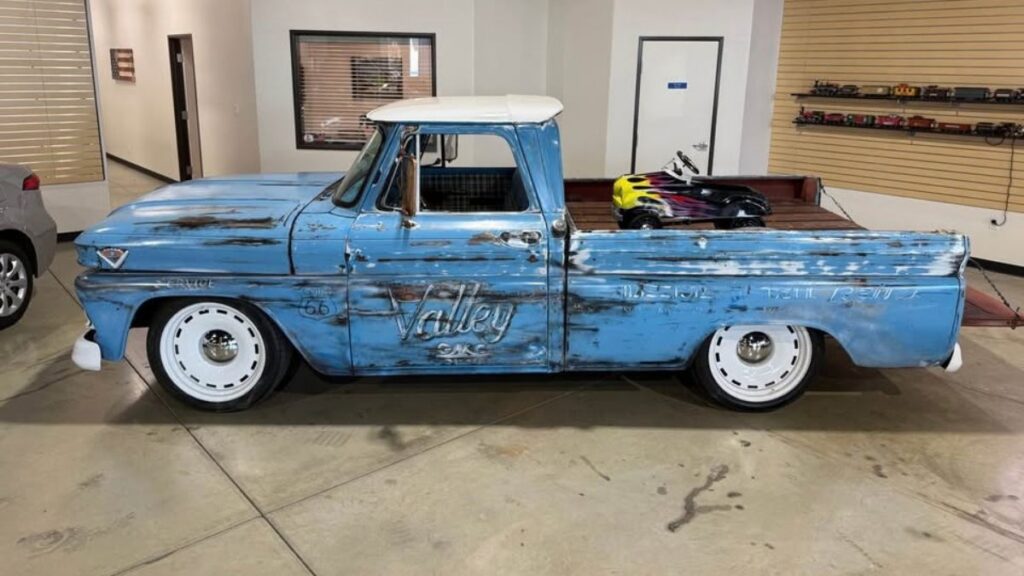
Those wheels hit you first. Huge white steel wheels fill the arches, capped with polished chrome centers. Against the faded blue body, they practically glow. The truck sits low and level, with the tires tucked up close to the fender lips. That stance gives it the attitude of a true lowered C10 without resorting to chrome billet or giant rims.
Now let’s talk about the paint, because you’ll have opinions. To my eye, this patina looks created rather than earned. Brown streaks run in suspiciously tidy lines across the hood and doors. The “Valley GMC” script, Route 66 shield, and faded service lettering tell the story of a dealership parts runner. Is that history real? Probably not. Still, I’ll admit it’s a nice touch. The artist clearly knew what they were doing, and the effect works from twenty feet away.
The gloss white roof and front bumper add contrast and tie the whole look together. Out back, a wood bed floor carries a flame-painted pedal car, though I’d bet that toy stays with the seller. Here’s my one caution. With faux patina, you can’t easily tell where the artwork ends and real oxidation begins. The hood edges and lower front corner show what looks like genuine surface rust. A buyer should crawl underneath and poke at the cab corners, rockers, and floor pans before handing over cash.
Inside the Cab: Plaid, Vinyl, and Pinstripes
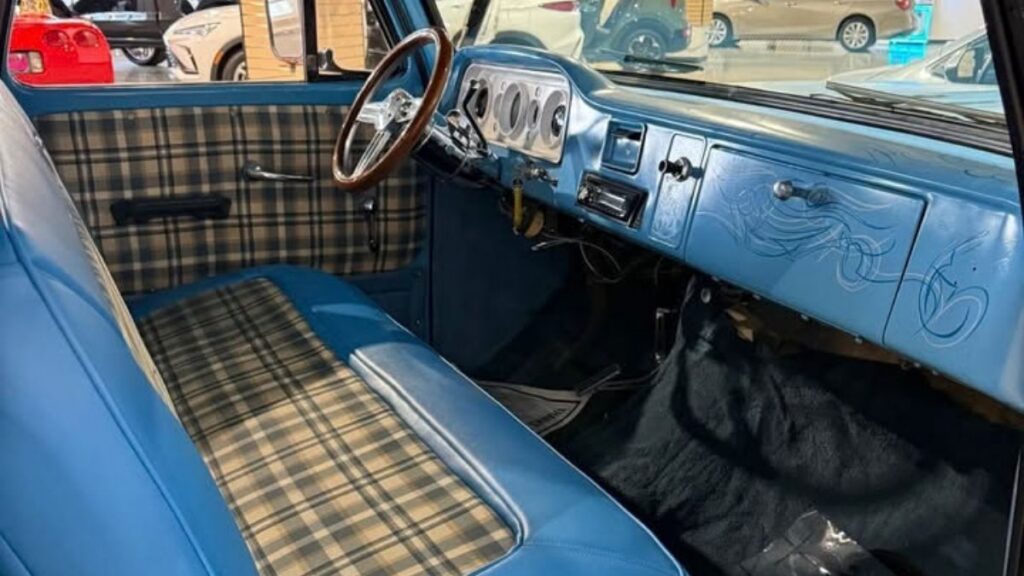
Open the door and the theme carries right through. Blue vinyl wraps the bench seat, with plaid cloth inserts that match the door panels. It feels period-correct without looking like a museum piece. Somebody put real thought into this cabin.
The pinstriping is my favorite detail on the whole truck. Delicate scrollwork flows across the dash face and the glovebox door. It echoes the striping on the hood and adds a hand-built feel that no catalog part can match. Up top, a wood-rimmed wheel with polished billet spokes sits on a tilt column. That’s a welcome upgrade for anyone who has wrestled a skinny factory wheel. The original-style gauge cluster stays put, and a modern radio fills the dash slot.
It’s not perfect, though. Loose wiring dangles beneath the dash near the steering column. That’s a tidy-up job, but you’ll want to know what those wires feed. The dark carpet also looks plush, almost shaggy. It reads more seventies van than sixties pickup to me. Your mileage may vary.
The LS Heart of This Classic Chevy Truck
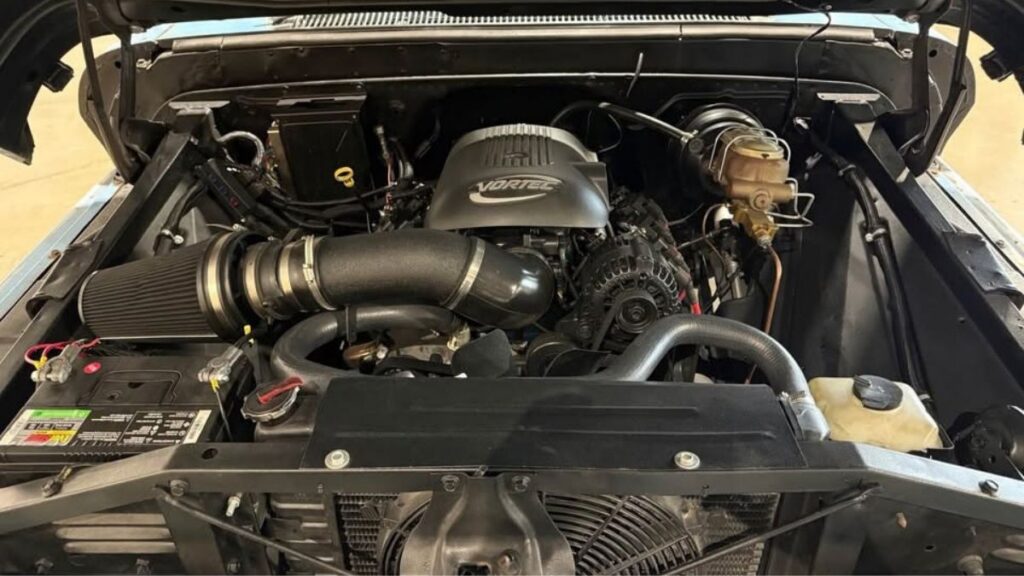
Pop the hood and the real story begins. The engine bay here is genuinely clean. A 5.3-liter LS V8 sits front and center, still wearing its Vortec engine cover. A big cone filter feeds a smooth black intake tube. An electric fan sits behind the radiator. A brass-finished master cylinder and booster handle braking duties. The builder kept the firewall mostly uncluttered, which makes future maintenance far less painful.
That 5.3 swap transforms the truck. In stock tune, these engines typically make around 300 horsepower. Compare that to the 1965 factory options, and you’re looking at a completely different machine. Turn the key, and the LS should settle into a smooth, even idle. No lumpy carburetor fuss. No choke games on a cold Visalia morning. Just a steady hum that hints at what waits under your right foot.
Underneath, stainless dual exhaust snakes back past a beefy rear axle. That setup should give the 5.3 a deep, mellow burble at cruise. Lean into the throttle, and the note will sharpen into a classic V8 bark that bounces off the cab glass. With the windows down on a two-lane road, that’s the soundtrack you buy a truck like this for.
Power steering makes a huge difference too. Old GM pickups often steer like a ship’s wheel in a storm. Here, the boosted rack and tilt column should make parking lots manageable and highway lanes easy to hold. The lowered stance will firm up the ride, so expect to feel the expansion joints. That’s part of the deal with any low truck.
The listing leaves some questions open. The seller doesn’t mention the transmission, the gear ratio, or the suspension hardware behind that drop. You’ll want those answers. A buyer should also ask about the wiring under the dash, the cooling setup, and whether the engine runs a standalone harness.

So, is $25,750 fair for a patina-dressed, LS-swapped GMC? It looks great, drives on modern power, and wears its personality loudly. What do you think? Would you keep the faux patina or treat this cousin of the Chevy C10 to a fresh coat of paint? Let us know in the comments below!

Author: Jason Skinner
Got a build worth featuring?
Send us photos and the story. We feature owner builds from every generation.